Understand your carpet before you clean it.
Carpet cleaning looks simple until a stain spreads, a wool pile changes colour, a room stays damp after washing, or a rental inspection turns cleaning into a dispute. This guide explains the practical decisions behind everyday carpet care in Christchurch: fibre type, soil, stains, moisture, equipment, cleaning methods, drying and when a specialist assessment makes sense.
Good carpet care is controlled soil removal, not simply “using more cleaner”
Most carpet problems become easier when you separate them into three questions: what is on the carpet, what the carpet is made from, and how much moisture or chemistry the material can safely tolerate.
Practical guides for homes, rentals and workplaces
Cleaning methods
Hot-water extraction, low-moisture methods, spot treatment and where each approach makes sense.
Stain removal
Why blotting, chemistry, dwell time and fibre identification matter more than aggressive scrubbing.
Rental carpets
Current New Zealand tenancy rules, end-of-tenancy expectations and practical documentation.
Wool carpet
A more cautious approach to chemistry, moisture and agitation for natural wool fibres.
Water damage
Why clean-water spills and contaminated flooding are not the same cleaning problem.
Commercial carpet
Maintenance planning around traffic lanes, entrances, chair areas and business downtime.
Why carpet cleaning advice is often too simplistic
Carpet is not one material and dirt is not one substance. A modern Christchurch home might contain wool carpet in bedrooms, synthetic carpet in a family area, solution-dyed nylon in a high-traffic space and a completely different fibre in a rug. Those surfaces can react differently to water temperature, alkalinity, oxidising products, solvents and physical agitation. The stain itself also matters. Mud, cooking oil, milk, coffee, red wine, ink, pet urine and tracked road grime do not have the same chemistry. A technique that removes one mark can permanently set or spread another.
That is why this website approaches cleaning as a decision process rather than a collection of miracle tips. Start by identifying the carpet if possible. Check care information supplied by the manufacturer or retailer. Remove loose soil before adding water. Use the least aggressive treatment that is likely to work. Control the amount of liquid used. Extract or blot residues thoroughly. Then dry the area promptly. When the risk of colour loss, shrinkage, backing damage or contamination is high, stop experimenting and get specialist advice.
Christchurch conditions add a moisture question
In any city, carpet drying depends on airflow, temperature, humidity, carpet construction, underlay, the amount of water applied and how effectively that water is recovered. Christchurch homes vary widely: older houses may have cooler rooms and draught patterns, newer homes may be tighter and better insulated, and rental properties can differ greatly in heating and ventilation. The cleaning method should therefore match the building as well as the carpet. A heavy wet clean late in the day is not automatically a good idea if the space cannot be heated and ventilated afterwards.
Moisture is especially important after a plumbing leak, storm entry or other water event. Ordinary carpet cleaning assumes the carpet is basically sanitary and that water is being deliberately introduced in a controlled amount. Flood recovery is different. Water can move through carpet into underlay, floor edges, wall linings and subfloor materials. The source of the water also affects risk. The Insurance Council of New Zealand advises documenting flooding, beginning safe drying where appropriate and disposing of items that are fully flooded and cannot be properly cleaned. That type of event may require an insurer, restoration contractor or other specialist rather than routine cleaning.
Vacuuming is part of cleaning, not just preparation
Dry particulate soil is one of the biggest everyday loads carried by carpet. Dust, grit, hair, fibres and tracked material settle through the pile. If a large amount of loose soil is present, adding moisture can turn it into a harder-to-remove mixture. A slow, methodical vacuum with appropriate agitation can remove a meaningful amount before any spotting or extraction begins. High-traffic zones, edges, stairs, entrance areas and locations around frequently used furniture deserve more attention than visually clean, low-use sections of the room.
Vacuuming frequency should be based on use rather than a universal calendar. A household with children, pets and an exterior door opening directly onto carpet may need more frequent attention than a low-occupancy apartment. Commercial entrances may need daily or even more frequent maintenance while a spare bedroom may need very little. The goal is to remove soil before repeated foot traffic works it deeper into the pile and before oils help it bind to fibres.
Spot cleaning works best when you slow down
The common reaction to a spill is to scrub hard. That can be exactly the wrong response. Scrubbing may spread the contamination, distort the pile or create a permanently fuzzy area that remains visible even after the stain is gone. For many fresh liquid spills, blotting with clean absorbent material is a safer first step. Work from the outside of a spill towards the centre so that you do not enlarge it. Use repeated light pressure rather than grinding the surface.
Before applying a stain product, read the label and make sure it is suitable for the fibre. More chemical is not necessarily more effective. Excess product can leave residue that attracts soil or becomes difficult to rinse. Mixing cleaners is a poor idea because ingredients can interact, change pH or create unsafe vapours. If you are dealing with bleach, strong solvents, unknown chemicals, biological contamination or a valuable carpet, the risk of improvising rises quickly.
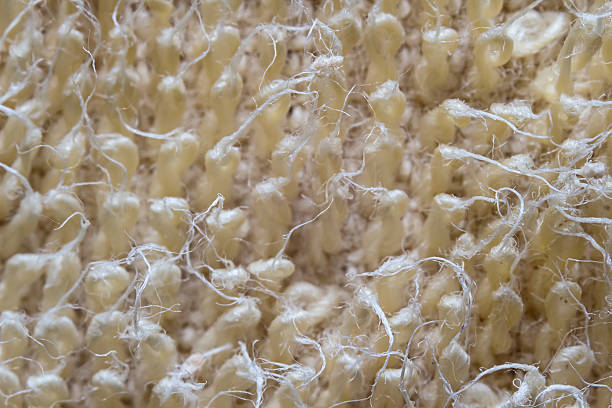
Hot-water extraction and “steam cleaning” are often discussed as if they are one simple process
Consumers commonly use the phrase steam cleaning for professional hot-water extraction. The practical performance of the process depends on far more than the name. Pre-vacuuming, pre-treatment, agitation, water temperature, pressure, extraction power, number of recovery passes, detergent selection and drying conditions all affect the result. Equipment that sprays a lot of solution but recovers poorly can leave carpet wetter than necessary. Conversely, insufficient solution or dwell time may not release oily or bonded soil effectively.
Low-moisture approaches have their own place. Encapsulation and other methods can be useful in commercial maintenance programmes where fast return to use matters. Spot treatment can be the best choice when only a small area has a problem. The correct question is not “Which method is always best?” but “Which process fits this fibre, soil load, environment and required drying time?” Our carpet cleaning methods guide compares these approaches without pretending one method solves every situation.
Wool deserves a more conservative approach
Wool is widely valued for appearance, comfort and resilience, but natural fibres require attention to chemistry and moisture. Strongly alkaline products, aggressive stain treatments and poor rinsing can create colour, texture or residue problems. Heat and physical action also need to be controlled. If you know the carpet is wool, check the manufacturer’s instructions before applying a general household cleaner marketed for “carpets” in the broadest sense.
Synthetic carpet is not risk-free either. Different dyes, backings and constructions still impose limits. Some synthetic fibres resist certain types of staining better than others, while oily residues can be particularly visible on some materials. The safest approach is identification plus testing, not the assumption that synthetic means indestructible.
Rental carpet cleaning: know the rule before paying for a service
New Zealand tenancy guidance is more specific than many people realise. Tenancy Services states that tenants moving out must leave a property reasonably clean and tidy. It also says tenants do not automatically have to arrange professional carpet cleaning simply because a tenancy clause says so; a blanket clause requiring more than the Residential Tenancies Act can be unenforceable. That means “professional carpet clean at every move-out” is not a universal legal rule.
There is now an important pet-related nuance. Current Tenancy Services guidance on pet consent conditions gives, as an example of a potentially reasonable condition, requiring carpet to be cleaned to a professional standard at the end of the tenancy where an approved pet is allowed indoors. The exact circumstances matter. Tenants and landlords should read the current agreement and official guidance rather than relying on an old blog post or a remembered rule from a previous tenancy. Our rental carpet guide explains the distinction and links to official information.
Stain removal is not the same as general cleaning
A room can be uniformly soiled and need overall cleaning while also containing several localised stains that need different treatment. General cleaning may improve the background appearance without fully removing dye, tannin, oil, protein, rust or other specialised stains. In some cases a mark that looks like a stain is actually permanent colour loss, fibre damage, pile distortion or wear. No cleaner can “remove” missing dye or reverse every physical change.
This distinction is important when setting expectations. If a dark traffic lane disappears during cleaning, much of it was likely removable soil. If a pale patch remains because a chemical has stripped colour, repeated cleaning can make the problem worse rather than better. Good diagnosis prevents unnecessary aggression.
Pet odours can extend below the visible surface
Pet urine can move through the pile into the backing, underlay and sometimes the floor beneath. Surface deodoriser may improve the smell for a short time without treating the source. Repeated contamination in the same area can therefore become a restoration problem rather than an ordinary spot-cleaning problem. UV inspection, moisture assessment, targeted treatment or replacement of affected underlay may be considered depending on the situation.
For households comparing outside help rather than doing everything themselves, it is sensible to look beyond advertising claims and ask how a provider identifies fibre, treats stains, controls moisture and explains drying. As one example of a local provider website, you can review these Christchurch carpet cleaning specialists and compare the process they describe with the principles in this guide. The useful comparison is method, suitability and transparency—not simply the boldest promise.
Commercial carpet care is a maintenance programme
Offices, retail spaces and other workplaces usually develop uneven soil patterns. Entrances collect outdoor material, lift lobbies and corridors receive repeated traffic, desk areas collect chair movement, and food areas face spills. Waiting until the entire carpet looks heavily soiled makes restoration harder and creates unnecessary disruption. A better plan combines entrance matting, routine vacuuming, rapid spot response and periodic deeper cleaning based on traffic.
Commercial cleaning also has an operational constraint: people need to return to the space. Drying time, safety signage, noise, furniture movement and access windows can matter as much as cleaning chemistry. In some settings, lower-moisture interim maintenance can extend the period between deeper restorative cleans. The exact programme should follow the carpet manufacturer’s maintenance requirements when those are available.
How to choose a professional without turning the decision into a price-only comparison
A quote is easier to assess when you know what is included. Ask whether vacuuming is included, how spots are assessed, what happens with furniture, whether there are additional charges for stairs or difficult stains, what drying conditions are expected and what happens if the cleaner identifies a fibre or stain risk. A serious provider should be willing to explain limitations rather than guarantee that every mark will disappear.
Price still matters, but the cheapest number can represent a different scope of work. One quote may cover only a basic extraction pass while another includes pre-vacuuming, pre-treatment, agitation, spot work and additional drying passes. Comparing the written process is more useful than comparing one headline number. For a one-room refresh, a smaller scope may be perfectly adequate. For neglected carpet, wool, odour or difficult stains, diagnosis and process become more important.
Build a maintenance routine around your household
There is no single correct schedule for every Christchurch property. Start with risk factors. More outdoor soil comes in when entrances open directly onto carpet and mats are inadequate. Pets add hair, oils and occasional accidents. Children increase spills and floor-level activity. Shoes increase abrasive grit. Cooking areas can contribute airborne oils. A home that is occupied all day will generally load carpet faster than one used mainly in the evening.
A practical routine is simple: stop soil at entrances, vacuum before soil becomes embedded, respond to spills promptly, avoid overusing spot chemicals, and periodically inspect the carpet in strong natural light. If high-traffic lanes remain dark after careful vacuuming, the carpet feels sticky, odours return in humid conditions, or staining keeps reappearing after drying, it may be time for deeper assessment rather than more household spray.
Use this website as a decision guide
If your concern is a specific spill, start with the stain removal guide. Pet households can use the pet stain and odour guide. Renters and landlords should read the New Zealand rental carpet page. If you are comparing machines, contractors or terminology, read cleaning methods and how to choose a carpet cleaner. For recurring dampness, flooding or visible mould, move away from ordinary cleaning advice and read the moisture guide or water-damage guide.
The central principle across all of these pages is restraint. Carpet care is usually more successful when you remove as much dry soil as possible, identify the material, use appropriate chemistry in controlled amounts, recover residues and moisture thoroughly, and stop when the problem exceeds ordinary maintenance. A dramatic before-and-after photo can be persuasive marketing, but the long-term result depends on what happened to the fibre, backing, underlay and indoor environment after the photograph was taken.